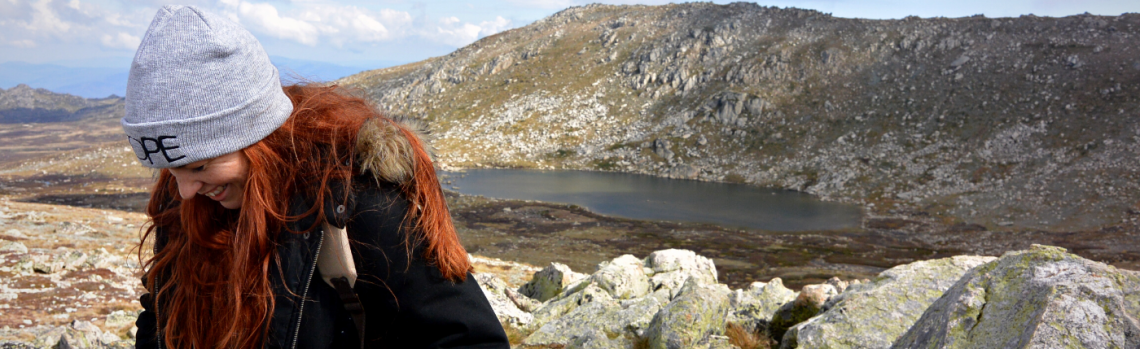
I was 23 years old when I was diagnosed with Melanoma, the deadliest form of skin cancer. What most people think of when they hear the word “cancer” is “bald, dying, and a disease that impacts any other organ other than your skin”. People don’t generally jump to Melanoma when they hear about cancer – most people will think Breast, Brain, Bowel, Cervical, Blood, or Ovarian cancers when they think of a young woman before they would even think of Melanoma. I mean, that’s just skin cancer right? WRONG!
I remember sitting in the doctors office alone waiting for him to tell me what was going on. It was only 2 weeks before that I saw him for a biopsy when he reassured me that I wasn’t going to have cancer because “I’m too young” for it. That sentence gave me hope for 14 whole days – and that hope was about to evaporate into thin air.
“I’m sorry but you have cancer. You have Melanoma and if we don’t remove it you will die”
So much for it just being skin cancer.
I lived in a regional town where nothing happened at the same pace as the cities. I had my first surgery and had to wait 2 weeks to get the results back to find out whether or not we got all of the cancer. Those 14 days came by and I found out they didn’t get all of it, so back I went in and waited another 14 days to hear the exact same thing. The third and final surgery proved to be a success with the doctors declaring me cancer free (but not in remission, that’s a different badge of honour). Little did I know my battle was only just getting started.
I have come to learn a lot about the misconceptions people have of cancer, especially skin cancer throughout my journey. I have come to learn that people deem skin cancer to be the “lucky” or “the best cancer” to be diagnosed with. And let me tell you, that attitude really messed with my mental health during my remission. Most people I met had a real blasé attitude when they found out I had Melanoma, with several (ok, many) people telling me that it’s the best kind of cancer to have or that “you can’t die from skin cancer”. Yep, told me right to my face that the cancer I had doesn’t actually kill anyone.
For an insecure 23 year old I struggled to even confront these comments when they were said. I found myself clamming up and retreating because to me it felt like society was invalidating my cancer experience. That what I went through and was going through was not a big deal and I was not worthy of the cancer survivor badge. This basically resulted in me down playing my cancer experience by starting statements like “I had cancer but I didn’t have chemotherapy”, “I had cancer but I didn’t have radiation”, “ I had cancer but it was just skin cancer”. I felt like no-one took me seriously and were rolling their eyes behind my back – because it’s just skin cancer. It’s the best kind of cancer to have, right?
I joined some Facebook groups for cancer survivors and some members felt that I didn’t “deserve” to be calling myself a cancer survivor because I didn’t have chemotherapy or radiation or that it was, again, “just skin cancer“. I left that group pretty much within 48 hours of joining. The judgement from not only non cancer survivors but some other cancer survivors spun me into a deep depression.
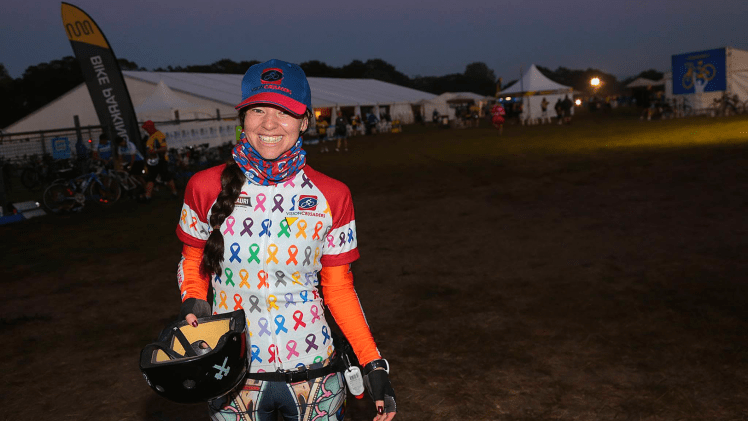
I didn’t know any other cancer survivors, let alone ones my own age, and everyone else around me could not understand my journey. So I sought community in an event called “the Ride To Conquer Cancer” or as I like to call it, the event that saved my mental health and life. It was at this event I met a gentleman, a fellow cancer survivor, who came up to me to start discussing our own journeys. His journey was absolutely courageous. I felt this feeling of not being worthy of even calling myself a cancer survivor because, hey, society and everyone around me had been telling me that Melanoma really isn’t a big deal. I felt myself shrinking, so when I started to use the same old justification lines that I had used for 3 years, he stopped me and said “You don’t need to say the other stuff. You had cancer.” It’s hard to put exactly into words how this interaction with this legend of a man positively impacted me, but he made me finally feel like it was OK to have Melanoma. That it was OK to call myself a cancer survivor. And that my journey is valid. That man saved my mental health – and boy, he must have foreseen that I would need a strong mentality to get through the next 7 years of remission journey.
The last 10 years has opened my eyes to the levels of misinformation and misconceptions about skin cancer. I’ve come to notice that when people say “skin cancer” they do not realise that there is more than 1 skin cancer that someone can be diagnosed with – and I believe it is important to make the distinction and acknowledge the different types of skin cancer. Most people think Melanoma is the only type of skin cancer and whenever someone gets “a skin cancer removed” they are in fact just having a melanoma removed. This then creates the perception that having Melanoma, or skin cancer, is not really a big deal and something that is to be expected as we all age. This is despite there being scientific evidence identifying Melanoma account for 2% of all skin cancer diagnoses and 75% of all skin cancer related deaths in Australia (1).
The other types of skin cancers, and the majority that are diagnosed, are Basal Cell Carcinomas or Squamous Cell Carcinomas. These are known as non-melanoma skin cancers and are the majority of skin cancers diagnosed in Australia. Basal Cell Carcinoma is the most common form of skin cancer diagnosed and is the least dangerous form of skin cancer as they rarely metastasize or spread. But you’d still want that sucker treated, it is cancer after all. Squamous Cell Carcinoma is the second most common non-melanoma skin cancer, accounting for 30% of all skin cancer diagnoses. If left untreated, Squamous Cell Carcinomas can spread to other parts of your body and become fatal.
The wide spread misconception and lack of understanding about Melanoma and skin cancer has always popped up in comments that people say to me or around me in conversations throughout my almost 10 years in remission, but one conversation in particular stands out in my mind. I was at the beach in San Diego during my internship at an action sports magazine (bucket list and career bucket list item ticked off!) and the other young interns were asking me why I was so concerned with the seeking shade and sun protection. I proceeded to tell my fellow interns my cancer journey and when I had finished one of them turned around and said to me “You know, Melanoma isn’t really a cancer it’s more a rite of passage”. I wasn’t too taken aback since I as already used to this type of attitude surrounding my cancer. Scary fact: did you know that one person in Australia will die from Melanoma every 4 -5 hours (2).
I also learned that there will be people who will tell you, directly or indirectly, that YOU are the cause of your own cancer. I have had several incidences like this. I had a vegan directly blame me for having cancer because I eat meat and that she had no sympathy for me. I also had someone indirectly tell me that sunscreen causes all skin cancers and that anyone who wears sunscreen deserves to get cancer. She forgot that I was a Melanoma survivor. I have also been in the room with people who have known about my cancer journey and have made jokes about skin cancer and people who get skin cancer. These “friends” did not realise, or care, that these jokes were at my expense.
I’ve often wondered why people would have such a casual, non chalant attitude when it comes to Melanoma or skin cancer. What is it about Melanoma and skin cancer that makes people roll their eyes, screw up their noses and form the opinion that that kind of cancer is no big deal? I do believe one reason is that there is misinformation about skin cancer and melanoma floating around society. Another is that there is a societal stereotype of what a cancer patient looks like and goes through, and most of the time, someone with skin cancer doesn’t look like it physically and what our journey entails. So if we don’t look like what we’ve been told a cancer patient or survivor looks like and go through the stereotypical journey of what we’ve been told someone with cancer goes through, then it can’t really be serious.
The biggest thing about myself I have learned throughout my 10 year journey, so far, is that I have an inner strength of a warrior. I was able to manifest strength during those times I felt alone or was actually physically alone in a doctors office. I have been able to stand tall whilst others belittled, invalidated or made jokes at my expense about my cancer journey and Melanoma. I’d like to be able to say I no longer have to call upon my inner strength in the face of such experiences – but I’d be lying. These things still happen.
I also learned that seeking community is vital during any situation that is trying and difficult, especially cancer. These people are your tribe and will understand, better than anyone else, the anxiety attacks and the thoughts that are on repeat. Battle Buddies are important – Seek 👏Them👏Out. Most hospitals will have a notice board for support groups or seek them out on Instagram and Facebook (cancer chicks AU is my fave group!). Heck, find me on Instagram and I will be your battle buddy!
But the biggest thing I have learned is that life is an adventure book waiting to be written. Seek joy. Seek fun. Seek that which makes you feel most ALIVE. Yes, create a god damn bucket list and make it full of everything YOU want to do, even if it’s simple things like learning your grandmas rissole recipe (still haven’t mastered it!). Don’t go sliding into your death bed wishing you could have lived an adventurous life, on your own terms and in your own definition. Don’t put your life off to do things that don’t give you joy or give you the sense of being truly alive. Book that 6 month trip around Europe. Start that blog (hello, I did!), start that side hustle, move to another country. Just do it!
Slowly, society is starting to understand more about Melanoma and skin cancer. I have seen some changes in attitudes and understanding of skin cancer over the years as advertising campaigns about skin cancer have become more mainstream and with celebrities starting to share their own experiences. But we still have a lot of work that needs to be done to stop normalising and being desensitised to the occurrence of skin cancer in Australia and to stop the misinformation and misconceptions about skin cancer, especially in my generation and the younger ones. One day we will get to a place where people won’t say “it’s just skin cancer“. But we aren’t there yet.
And don’t forget to slip, slop, slap and get your skin checked regularly. Sunburns aren’t cute.
Much love,
Lara X
Psst. Follow me on social media!
You might also like
Mind Your Language: Words Matter When It Comes To Discussing Mental health
I’ve thought a lot lately about how important the words we use when talking about mental health are. Words we use have a powerful influence on how we shape our mental health journey and life. They influence our thoughts, mood and emotions, and actions. ⠀ ⠀
Read More
Joy and Happiness is Your Birth right
It might sound like an extremely obvious or even obnoxious statement to make, but I wonder how many of us take the time in our often hectic and busy lives to truly consider this statement – joy and happiness is your birth right. Yep – you, my dear friend, deserve to be happy for the…
Read MoreLatest on the ‘Gram

 Rosè Nomad